
★★★★★ One-to-One • Confidential
Personalised Palm Reading guidance
Palmistry Goes Beyond the Four Major Lines
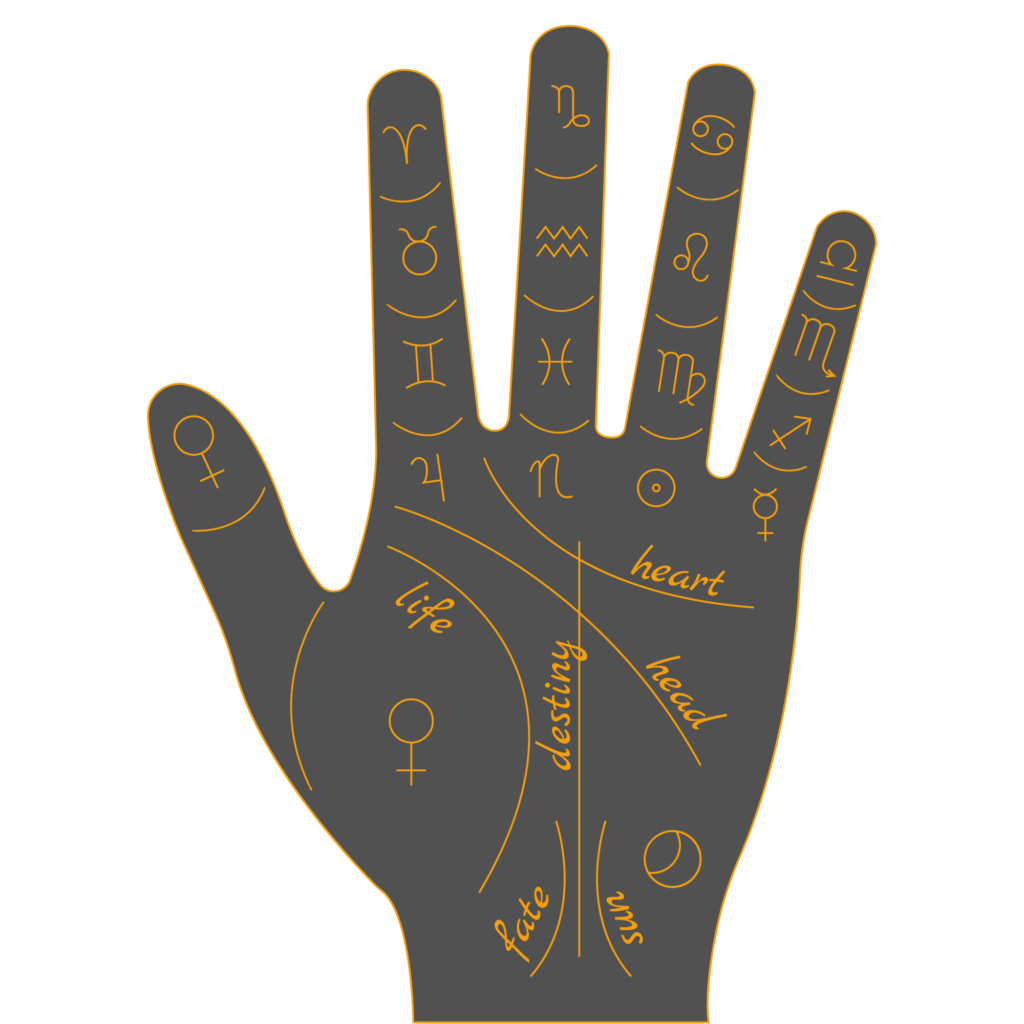
Traditional Indian palmistry, associated with Hast Samudrika Shastra, studies the hand as a whole.
A reading can consider the shape and texture of the palm, fingers, planetary mounts, major and minor lines and significant markings.
Traditional practitioners may also compare both hands to understand differences between inherent tendencies and experiences reflected in the hand.


Every Part of the Hand Adds a Clue
Jeevan Rekha
Mastishk Rekha
Associated with thinking, learning, judgement and mental tendencies.
Hridaya Rekha
Bhagya Rekha
Parvatas / Mounts
Hand Shape & Markings
Guidance That Is Personal To You.
At Naadi Jyotish, we don’t believe astrology should make you afraid of the future. We believe it should help you understand your present and approach your future with greater clarity.
Understanding
We begin by listening to your concerns before interpreting your chart.
Analysis
Every recommendation is based on a careful study of your horoscope, not assumptions.
Guidance
Our consultations focus on helping you make better life decisions with clarity & confidence.
Book Your Palm Reading
Frequently Asked Questions
Palm Reading, traditionally known as Hast Rekha and associated with Hast Samudrika Shastra, is the traditional study of the hand. A reading can consider the major lines, minor lines, planetary mounts, fingers, palm shape, texture and distinctive markings together.
A traditional palm reading may examine the Jeevan Rekha, Mastishk Rekha, Hridaya Rekha and Bhagya Rekha, along with other lines and markings. The mounts, fingers and overall hand structure are also considered rather than interpreting one line in isolation.
Traditions differ, but many palmists examine both hands. Differences between the hands may be considered when interpreting inherent tendencies and how a person's experiences and choices have developed over time.
Palm Reading is traditionally used to interpret tendencies, patterns, strengths, relationships and significant changes, rather than guaranteeing a fixed future. A responsible reading should be treated as traditional guidance and interpretation, not absolute certainty.